


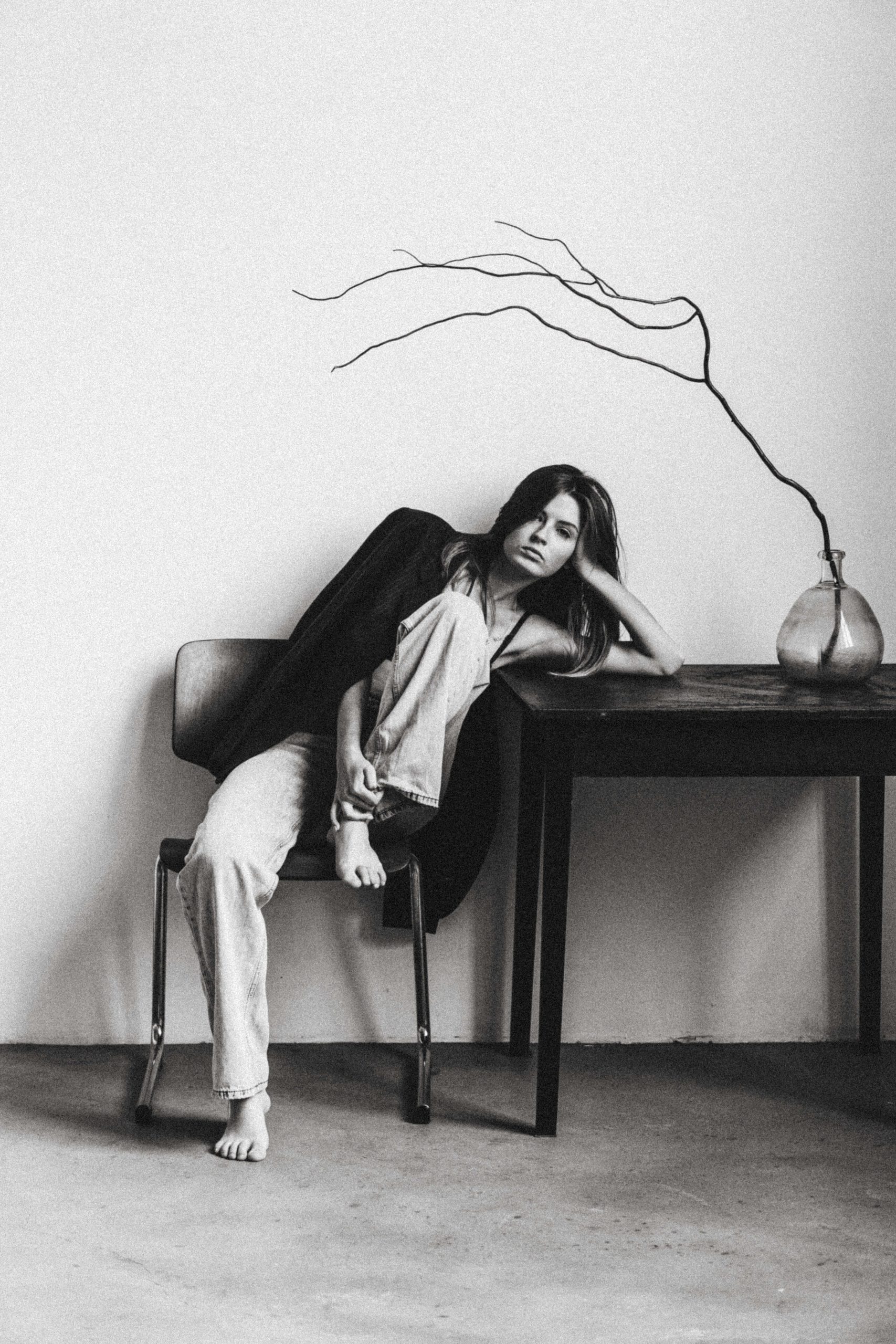
Not every day begins with inspiration.
Sometimes the ideas are there before I sit down. The words come easily, the direction feels clear and the work seems to carry its own momentum.
Other days, I can sit in front of the same project and feel nothing.
That is when the questions begin.
Am I procrastinating? Am I afraid of the work? Do I need to be more disciplined, or am I genuinely too depleted to create anything meaningful?
Knowing when to push and when to pause is one of the most difficult parts of sustaining a creative life.
Self-leadership is not about overpowering every mood. It is about knowing yourself well enough to recognise what you need.
Sometimes we need to move through our resistance and begin before we feel ready. Other times, what looks like procrastination is genuine exhaustion asking for our attention.
The difficult part is learning to tell the difference.
Your Mood Is Information
Creative work requires us to be in conversation with ourselves.
Some days, I arrive at my work feeling clear and energised. On other days, I arrive distracted, overwhelmed or already depleted by everything else that life has required from me.
That does not always mean I should abandon the work.
A difficult morning does not have to decide the direction of my entire day. A mood can be acknowledged without being placed in charge.
But neither should every feeling be dismissed as an excuse.
Our energy carries information. The challenge is learning how to listen to it without allowing every passing emotion to determine what we do next.
Resistance or Depletion?
When I feel myself pulling away from the work, I try not to immediately label it as laziness or lack of discipline.
Instead, I ask myself what is really happening.
Am I avoiding the discomfort of beginning?
Am I afraid the work will not be good enough?
Does the task feel too large or unclear?
Or am I genuinely running on empty?
Resistance often begins to soften once I take the first step. Depletion tends to deepen when I continue forcing myself forward.
That distinction has become important in my creative life.
When the problem is resistance, I usually need a smaller way into the work. When the problem is exhaustion, I may need to stop, recover and return when I have something to give.
Both responses require self-leadership.
Beginning Before the Mood Arrives
We often imagine that creativity begins with inspiration.
But much of my work has been created by beginning before I felt completely ready.
I have learned that I do not need to feel brilliant, certain or deeply inspired to take one honest step. I only need to create an opening for the work to meet me.
Sometimes I give myself ten minutes.
Not as a trick to force myself into working for hours, but as a way of discovering what is actually possible that day.
Some days, those ten minutes open the door. I find the thread, my energy changes and I continue.
On other days, the ten minutes confirm that I need to step away.
Either way, I have listened rather than judged.
Changing the Conditions
When creativity feels far away, my first instinct used to be to question myself.
Now, I often look at the conditions around me.
Have I been sitting still for too long?
Do I need to walk, stretch or move my body?
Would a different environment help me see the work differently?
Have I turned the project into something so important that there is no longer any room to play?
Sometimes the work does not need more pressure. It needs more space.
A walk can clear what hours at a desk cannot. A change of room can interrupt a thought pattern. Singing, writing freely or playing with an idea that has no commercial outcome can reconnect me with the part of creativity that existed before it became work.
These practices do not remove the need for discipline. They help create the conditions in which discipline can become useful again.
Discipline and Intuition Belong Together
Discipline has held me through many stages of my life.
It taught me to rehearse, prepare, meet deadlines and continue when the novelty had disappeared. It has helped me keep writing through changing seasons, competing responsibilities and moments of uncertainty.
But discipline without self-awareness can become another way of overriding ourselves.
Intuition without discipline can leave important ideas permanently waiting for the right moment.
I do not believe we have to choose between them.
Discipline creates the container. Intuition helps us understand how to work within it.
One asks us to remain committed. The other tells us when the approach needs to change.
Together, they allow us to create consistently without treating ourselves like machines.
Creativity Is a Relationship
My creativity has never responded well to being controlled.
It responds to attention, honesty and trust.
Like any relationship, it changes. There are times of momentum and times of reflection. There are periods when ideas arrive faster than I can capture them and others when something is quietly forming beneath the surface.
Not every pause is a problem.
Not every uncomfortable feeling is a sign to stop.
The work is learning which is which.
That is what mindset means to me now. It is not the ability to remain positive, productive or perfectly composed at all times. It is the capacity to meet myself honestly and choose my next step with intention.
Sometimes that step is to begin.
Sometimes it is to change the conditions.
And sometimes it is to rest without turning rest into a personal failure.
The question is no longer, “How do I control my mood?”
It is, “What does this moment require from me?”
Share this journal post
Continue The Conversation
If this feels like your kind of reflection, Mentor Notes arrives every Tuesday with one thought, a deeper perspective and something to take into your own life.